How to Slash Error Rates and Rework in Manual Insertion Lines
How to Slash Error Rates and Rework in Manual Insertion Lines
Manual insertion lines remain crucial in many electronic manufacturing processes, especially for small-batch, customized, or complex components. While they offer flexibility and cost-effectiveness, high error rates and frequent rework are common pain points that hinder efficiency.
Simple manual assembly errors—such as wrong part placement, bent pins, reversed polarity, or missing components—lead to costly delays and accumulated losses. Rework wastes time and increases operational costs, a core challenge for manufacturers aiming to boost efficiency.
Fortunately, BRUNIMIND’s lean training systems, standardized work instructions, intelligent auxiliary tools, and comprehensive error inspection strategies can significantly reduce these issues. Drawing on BRUNIMIND’s expertise in DIP/THT production line upgrading, this article explores practical methods to cut errors and rework, helping manufacturers improve efficiency, reduce costs, and enhance product quality.
1. Common Sources of Errors in Manual Insertion Production
Manual insertion lines are prone to errors, often caused by human factors, unclear instructions, or equipment issues. Understanding these root causes is key to reducing errors. Below, we leverage BRUNIMIND’s production line optimization experience to highlight key error triggers and simple solutions.
1.1. Operator Fatigue and Lack of Concentration
Eye and hand fatigue increases the risk of missing components, incorrect installation, or overlooking critical details like polarity. Research shows error rates can double when operators work continuously for over two hours without breaks. Insufficient sleep, dim lighting, extreme temperatures, or noisy environments worsen fatigue and error likelihood.
1.2. Missing or Unclear Work Instructions
Ambiguous, incomplete, or missing work instructions force operators to guess correct steps, leading to inconsistent task execution. These inconsistencies appear as defects later, usually during testing— a key issue BRUNIMIND prioritizes in on-site production line diagnostics.
1.3. Component Orientation and Polarity Errors
Components like electrolytic capacitors, diodes, and transistors must be installed in the correct orientation. Reversed polarity causes severe damage, component failure, or even PCB damage. Such errors are common when markings are small or hard to read in normal lighting—BRUNIMIND designs exclusive visual identification solutions for this in standardized work instructions.
1.4. Component Placement Errors and Bent Pins
Incorrect component placement (e.g., resistors or capacitors) is common, especially on high-density PCBs. Bent pins from rough handling cause further issues: components may not insert properly, leading to poor subsequent soldering. BRUNIMIND avoids such operational errors at the source with specialized fixtures during production line optimization.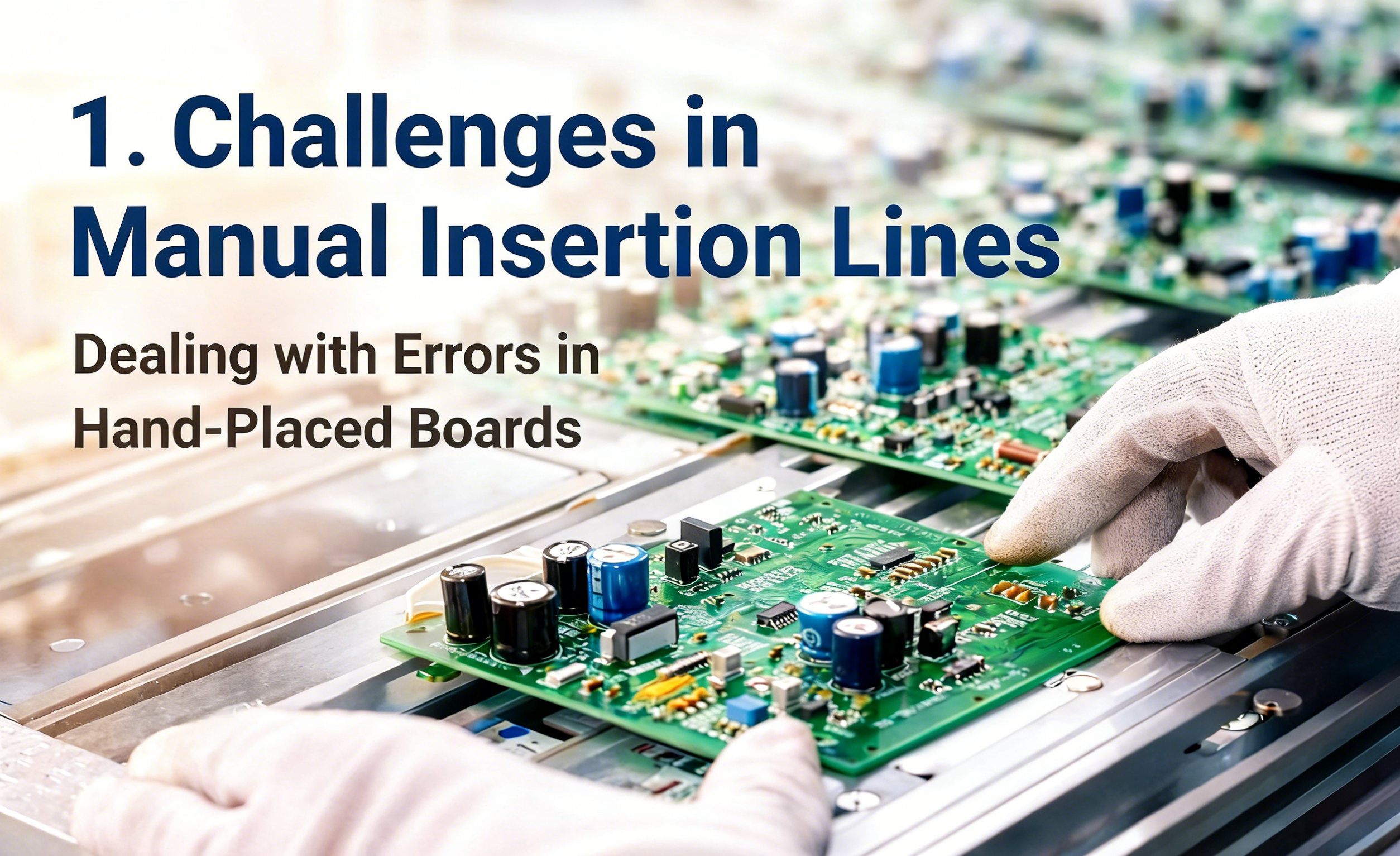
2. How Poor Tools and Fixtures Increase Errors
Tool and fixture quality directly impacts error reduction in manual insertion lines. Poor or worn equipment causes errors, increases rework, wastes time, and leads to product defects. Below, we use BRUNIMIND’s intelligent equipment integration experience to explain how poor tools cause errors and simple improvements to boost accuracy and efficiency.
2.1. Using Incorrect or Worn Insertion Tools
Using ill-fitting or worn tools for insertion easily damages pins or increases insertion difficulty. For example, dull wire cutters leave burrs on pins, making insertion hard; oversized tools squeeze components, bending pins or deforming parts. These minor issues cause misalignment or poor soldering, leading to failures during testing.
2.2. Lack of Proper Component Guides and Fixtures
Without specialized fixtures to secure PCBs and guide components during insertion, operators rely on judgment and visual alignment—challenging for multi-layer or double-sided PCBs requiring precise component positioning. Visual alignment alone increases errors due to overlooked details or misalignment. BRUNIMIND customizes PCB-specific guide fixtures to reduce alignment errors at the hardware level.
2.3. Lighting and Workbench Layout Issues
Insufficient lighting and cluttered workbenches are often overlooked but major error causes. Dim lighting makes component markings hard to read and potential defects hard to spot. A messy workbench with scattered tools and parts reduces efficiency and increases the risk of picking the wrong component. BRUNIMIND integrates ergonomic design and standardized workstation planning into layout optimization, with specialized lighting to improve the operating environment.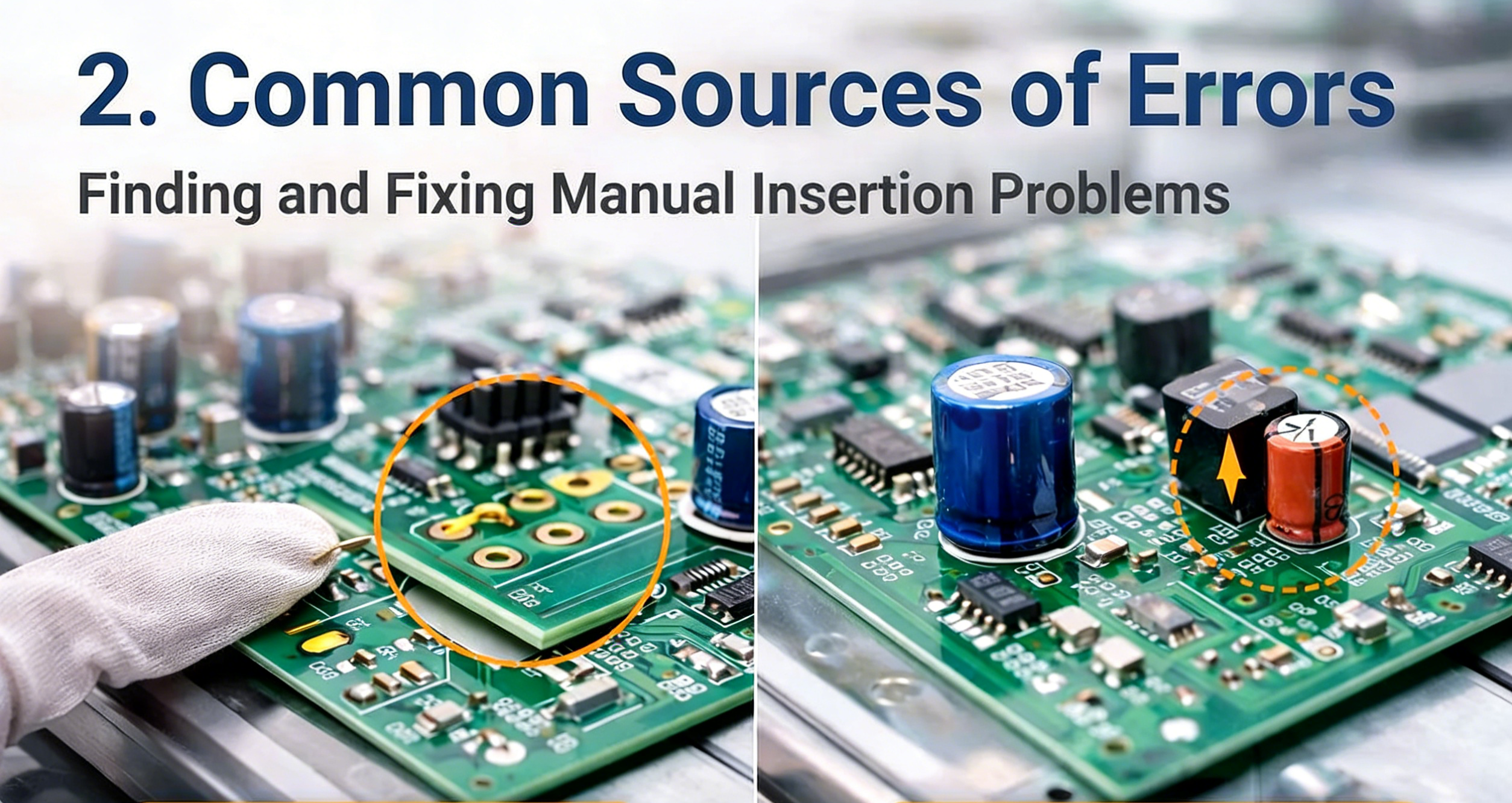
3. Enhancing Operator Skills and Awareness
Operator skills and awareness are key to reducing manual insertion errors. Well-trained, attentive workers make fewer mistakes, and a positive work environment supports focus. Below, we combine BRUNIMIND’s production line training system to share best practices for improving skills and creating a focus-friendly workspace.
3.1. Providing Structured Training Programs
New employees need comprehensive training, including theoretical learning and hands-on practice. Training covers key skills: reading technical drawings, identifying component markings, proper pin forming, and checking polarity. For experienced operators, BRUNIMIND recommends regular refresher courses to reinforce correct methods and introduce new processes or standards—ensuring all operators have the knowledge to work accurately, regardless of experience.
3.2. Regular Skill Checks and Feedback
Regular skill assessments are critical for maintaining high standards. Supervisors should conduct quick checks (e.g., having operators assemble test boards and evaluating error counts). Timely feedback helps operators correct mistakes and improve. BRUNIMIND assists enterprises in establishing standardized skill assessment systems—when employees know their work is regularly evaluated, they stay focused and prioritize performance.
3.3. Creating a Comfortable, Low-Distraction Work Environment
A comfortable, quiet workspace significantly improves operator focus and reduces errors. Ergonomic chairs, adjustable tables, and good ventilation reduce physical strain and fatigue. BRUNIMIND recommends encouraging short breaks every 90-120 minutes to help operators recharge. Noise-canceling headphones or designated quiet areas also help operators stay focused and avoid distractions.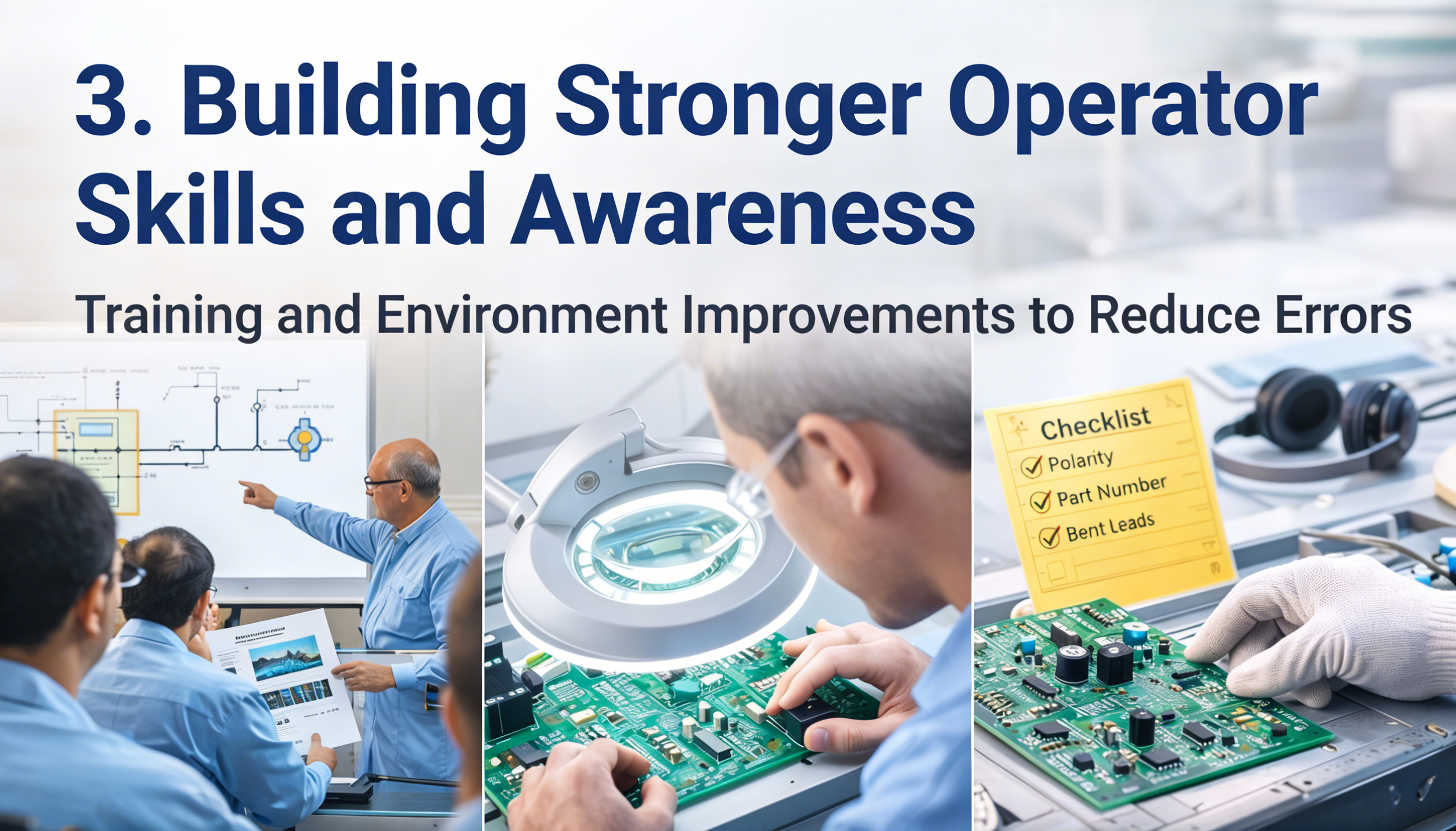
4. Developing Reliable Standard Operating Procedures (SOPs)
Reliable, standardized workflows ensure stable product quality and reduce errors. Clear, intuitive, easy-to-follow processes minimize confusion and ensure consistent task execution across all operators. Below, we use BRUNIMIND’s SOP implementation experience to discuss the importance of effective SOPs and visual tools to boost their impact.
4.1. Simple, Visual Standard Operating Procedures (SOPs)
Well-designed SOPs should be easy to understand. Short, clear sentences with large images and arrows to show each step help operators learn quickly. BRUNIMIND recommends placing SOPs directly at workstations for constant visibility—speeding up new employee training and ensuring consistent processes, reducing operational differences and errors.
4.2. Using Photos, Diagrams, and Color Coding in Work Instructions
Visual aids like photos and diagrams are critical for improving work instructions. For example, photos of correct component installation and color coding for polarity (red for positive, blue for negative) make instructions more intuitive. BRUNIMIND uses color-coded containers to distinguish component values in SOP design, preventing confusion, simplifying assembly, and ensuring the right component is used in the right place.
4.3. Standardizing Component Preparation and Pin Forming
Consistent component preparation is key to reducing defects. Each component should be prepared the same way: pins cut to the correct length, bent to the right angle, and inspected before insertion. BRUNIMIND recommends using simple tools or templates for pin forming to standardize processes and ensure consistent component preparation—reducing bent pins or incorrect placement, improving soldering quality, and cutting subsequent errors.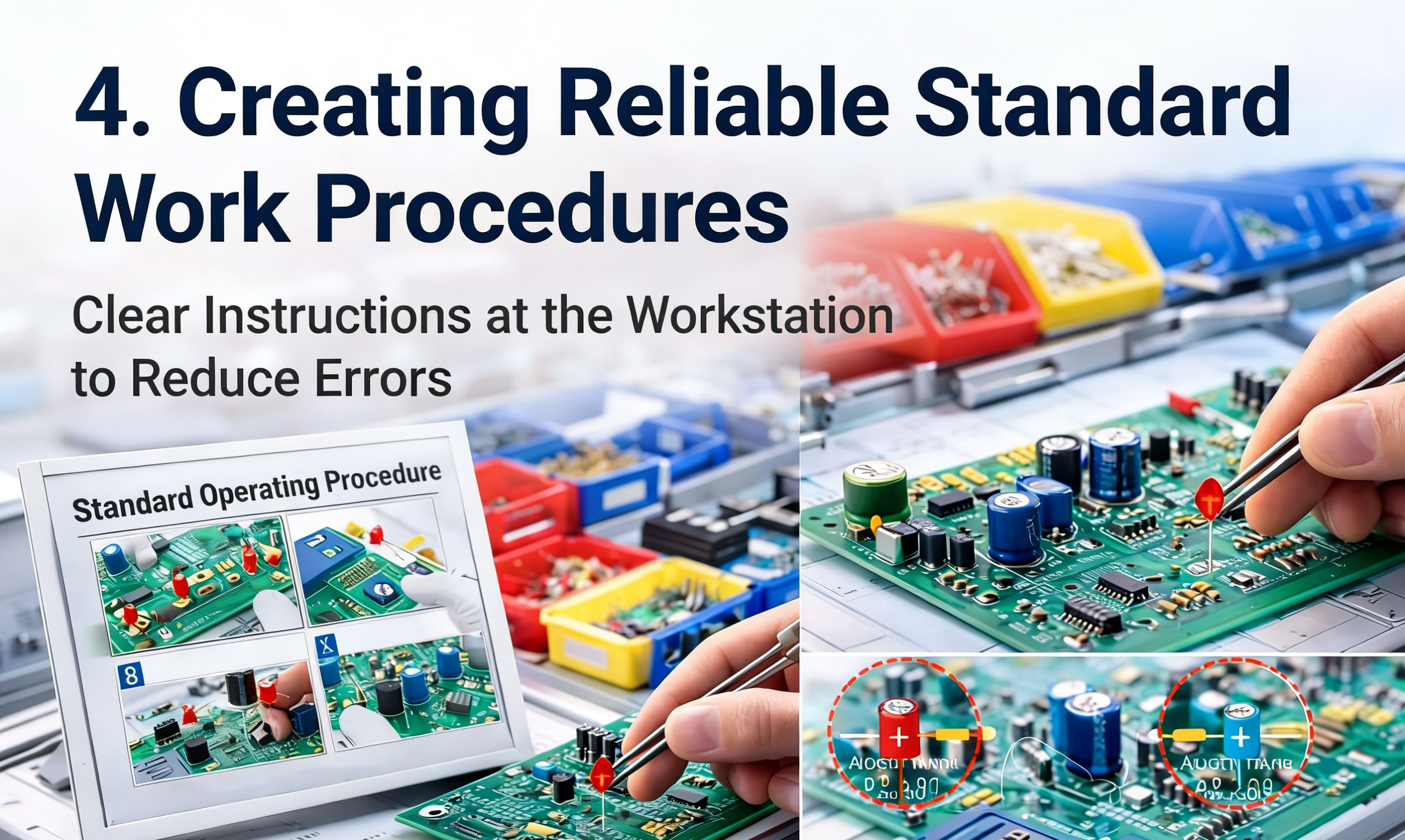
5. Using Fixtures and Auxiliary Tools to Prevent Errors
Fixtures and auxiliary tools play a vital role in ensuring correct component placement and positioning. The right tools help operators avoid common errors and improve efficiency. Below, we draw on BRUNIMIND’s intelligent fixture R&D and customization experience to explore simple, effective tools that significantly reduce errors and improve manual insertion line accuracy.
5.1. Designing Product-Specific Insertion Fixtures
Custom fixtures are an excellent way to ensure precise component positioning. Fixtures securely hold PCBs and have guide slots or holes to ensure components are inserted only in the correct orientation. Even for small-batch production, BRUNIMIND’s simple wooden or plastic fixtures prevent misalignment and ensure consistency—eliminating errors and ensuring accurate component placement.
5.2. Implementing Pin Locators and Component Placement Guides
Pin locators and component placement guides are low-cost, high-efficiency tools for reducing errors. Transparent plastic overlays or pin positioning templates clearly show each component’s placement, making it nearly impossible for operators to place components incorrectly. BRUNIMIND-optimized guides maintain operational consistency and speed, especially for complex or high-density PCBs.
5.3. Adding Low-Cost Visual and Mechanical Error-Prevention Devices
Visual and mechanical aids significantly reduce error risk. For example, a simple light box under the PCB improves hole visibility for more accurate alignment. Mechanical error-prevention devices (e.g., components that only fit one way) physically prevent incorrect placement, making it nearly impossible to install components backwards. BRUNIMIND’s cost-effective solutions improve accuracy, reduce errors, and enhance overall production quality.
6. Adding Inspection Steps to Detect Errors Early
Setting checkpoints in the manual insertion process is key to preventing error escalation. Simple, effective inspection steps help manufacturers detect errors early, reduce rework, and improve overall quality. Below, we use BRUNIMIND’s production line quality control experience to explore different ways to add inspections and prevent error spread.
6.1. Self-Inspection Rules at Each Workstation
After assembling each PCB, operators should quickly check key elements: polarity, correct component numbering, and pin condition. BRUNIMIND recommends posting a short checklist at workstations to remind operators of items to check before moving to the next step—catching small issues early to prevent larger problems later.
6.2. Mutual Inspection by Adjacent Workstations
Before starting their next task, operators at the next workstation can quickly visually inspect completed work. This “buddy system” uses a second set of eyes to spot errors (e.g., incorrect component placement or missing connections) the original operator may have overlooked. Early detection reduces subsequent issues and rework time.
6.3. Using Simple First-Article Inspection Tools
Simple inspection tools—such as magnifying lamps, hand-held magnifiers, or illuminated inspection tables—help detect issues early in production. For critical PCBs, BRUNIMIND recommends creating a quick checklist with photos of correct and incorrect examples to guide inspectors and ensure common errors are easily identified. These tools catch defects before they affect the entire assembly, improving final product accuracy and quality.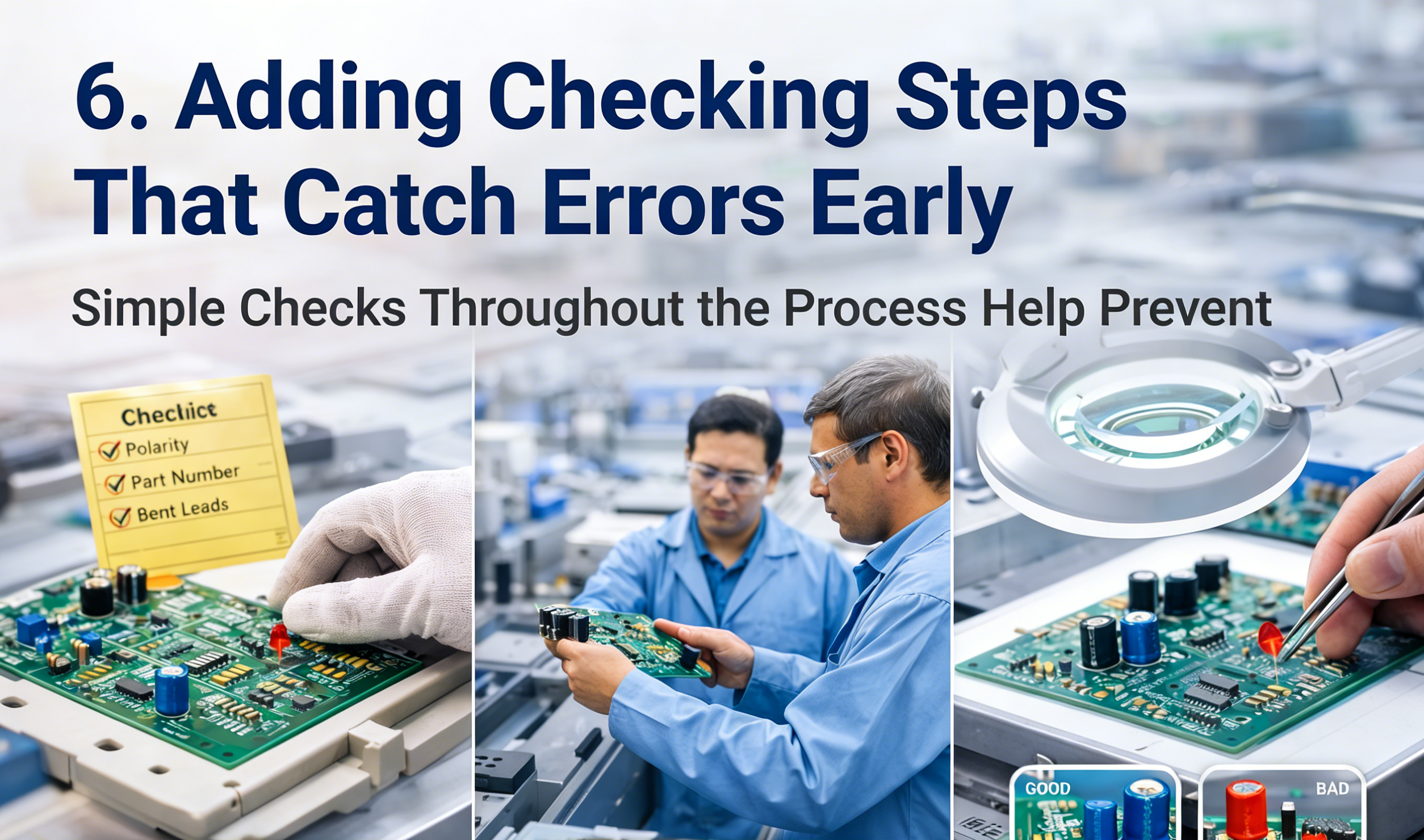
7. Recording and Analyzing Errors to Prevent Recurrence
Recording and analyzing errors is key to identifying patterns and preventing repetition. By tracking common errors and making data-driven adjustments, manufacturers can continuously improve processes. Below, we combine BRUNIMIND’s production line data management experience to explain how to effectively record, review, and analyze errors to prevent recurrence.
7.1. Error Tracking Forms or Electronic Logs
A simple tracking system is critical for identifying where and why errors occur. Whether using paper forms or mobile apps, operators should record key information: error type, affected parts, responsible operator, and impacted PCBs. BRUNIMIND’s independently developed production line data management system enables real-time data collection and systematic recording—easy to implement and providing valuable insights into common errors to help teams identify trends and take corrective action.
7.2. Weekly Review of Common Defects
Teams should review the most common production errors weekly. Through group discussions, everyone identifies root causes and agrees on corrective actions. This collaborative approach solves current issues and fosters a culture of continuous improvement, making team members more vigilant and proactive in avoiding repetition— a key concept BRUNIMIND promotes in full-life-cycle production line operation and maintenance.
7.3. Turning Error Data into Process Improvements
Error tracking reveals patterns: e.g., a specific part number is frequently misinstalled, or a workstation has insufficient lighting. Small, targeted improvements based on real data often deliver the biggest gains in efficiency and quality. BRUNIMIND provides customized process optimization solutions based on production line error data—by using data-driven solutions to address recurring issues, manufacturers reduce errors and improve overall process reliability.
8. Summary of Key Measures to Reduce Errors and Rework
Drawing on BRUNIMIND’s expertise in DIP/THT production line upgrading, the most effective methods to reduce errors and rework include:
• Providing clear visual guidance and standardized work instructions from BRUNIMIND
• Implementing structured employee training and regular skill checks by BRUNIMIND
• Using customized fixtures, guides, and error-prevention tools from BRUNIMIND
• Establishing lean self-inspection and mutual inspection mechanisms by BRUNIMIND
• Tracking errors weekly and correcting root causes with BRUNIMIND’s data management system
Factories adopting these BRUNIMIND optimization measures typically reduce error rates by 50% to 80%, with significant reductions in rework time. Less rework means lower costs, faster delivery, and higher customer satisfaction.
Reducing Manual Insertion Errors
BRUNIMIND’s Effective Strategies to Reduce Rework and Improve Efficiency
BRUNIMIND: What impact does training have on reducing manual insertion errors?
Good training can reduce error rates by 40% to 70% in the first few months. BRUNIMIND’s structured training system ensures operators fully understand the importance of polarity, how to read markings, and how to install components correctly.