BRUNIMIND Brand Preface_ Breaking DIP_THT Production Bottlenecks, Defining a New Height of Electronic Manufacturing Efficiency with Lean Innovation
With years of experience in the intelligent electronic manufacturing field, BRUNIMIND takes lean production concepts as the core, intelligent technology R&D as the support, and integrated solutions as the carrier. Focusing on the full-process upgrading and transformation of DIP/THT production lines, we have built a full-link service system covering on-site process diagnosis, core element implementation, and full-life-cycle operation and maintenance of production lines. Endowed with a team of senior process engineers, an independently developed production line data management system, and the ability to integrate intelligent equipment for multiple scenarios, BRUNIMIND has always adhered to the brand mission of "enabling every DIP/THT production line to achieve dual leaps in efficiency and value". We provide customized, cost-effective production line upgrading solutions for enterprises in automotive electronics, industrial control, sensors, consumer electronics and other fields, becoming a benchmark brand for lean innovation in the electronic manufacturing industry.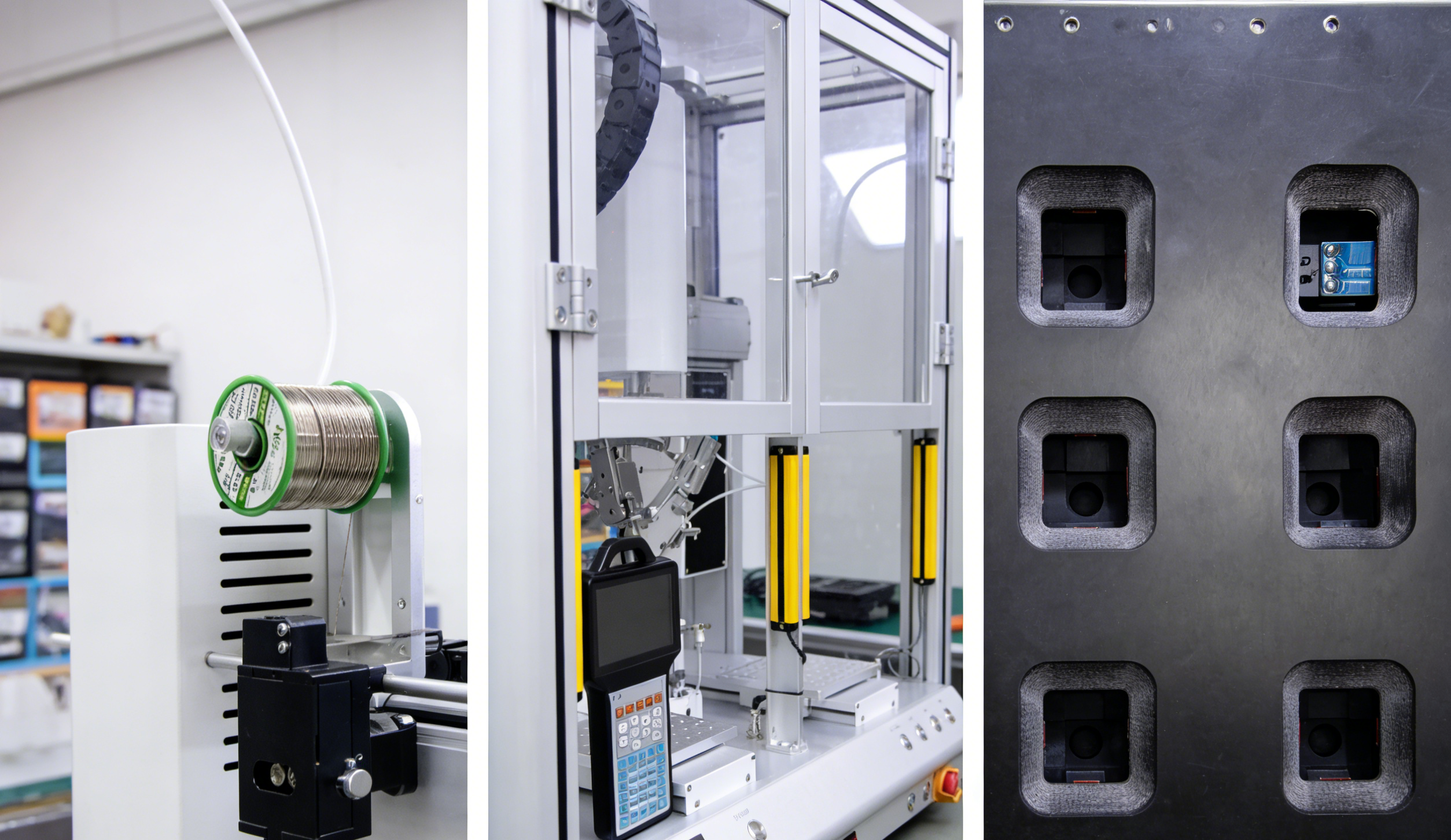
In 2026, as the electronic manufacturing industry evolves towards higher precision, flexibility and efficiency, DIP/THT production lines, as the core link of electronic assembly, still remain an implicit efficiency bottleneck for many manufacturing enterprises—characterized by high labor costs, fluctuating cycle times, and high rework rates. Especially in mixed-assembly PCB production, the integration challenge between through-hole components and complex SMT layouts has trapped the improvement of production line efficiency. While the industry generally falls into the misunderstanding that "adding equipment equals improving efficiency", BRUNIMIND firmly believes that true production efficiency improvement lies not in the upgrading of a single piece of equipment, but in the full-dimensional lean reconstruction from process foundation to technology application, and from data visualization to overall planning.
Deeply rooted in the electronic manufacturing field, BRUNIMIND takes cutting-edge industry insights as the anchor and actual production pain points as the orientation. Breaking away from the single thinking of traditional equipment procurement, we deeply integrate the five core elements—process optimization, welding stability control, quick changeover, strategic semi-automation, and data visualization—into the upgrading and transformation system of DIP/THT production lines through the standardized path of "on-site diagnosis - customized solution - phased implementation - data verification - continuous optimization". Furthermore, from the overall perspective of integrated production line planning, we help enterprises solve the industry common problem of "new bottlenecks arising from single-machine optimization". We deeply understand that the improvement of electronic manufacturing efficiency is not an overnight capital accumulation, but a gradual optimization that accurately addresses the essence of problems—without huge investment, it can achieve practical value such as 60% increase in output, 30% reduction in rework, and significant reduction in labor dependence. This is the underlying logic of efficiency upgrading built by BRUNIMIND for the industry, and this logic has been fully verified in many benchmark projects implemented by BRUNIMIND.
From the ergonomic workstation layout design to the lean implementation of U-shaped production lines, BRUNIMIND takes process reconstruction as the primary starting point for efficiency improvement, making every workstation and every material flow conform to the nature of production. In the sensor manufacturing production line upgrading project, relying on the modular production line design concept, BRUNIMIND introduced a collaborative robot automation solution. On the basis of retaining the original modular layout, there is no need to build large-scale protective barriers, realizing the automatic connection of three core processes. It not only maintains the coordination of each workstation, but also achieves a 97% simultaneous improvement in the production quality and efficiency of sensor assembly, becoming a classic practice of collaborative robots in flexible upgrading of such production lines. In the industry, the automotive intelligent terminal DIP/THT production line at Siruntianlang Xiaogan Base also achieved a leap in production capacity through process reconstruction. The base optimized the layout in accordance with Industry 4.0 standards, seamlessly connecting SMT placement, DIP insertion, and automatic assembly and testing processes. Only about 10 people are needed to complete the entire process from raw material feeding to finished product delivery, realizing an annual output of 3 million automotive intelligent terminals, which confirms the core enabling value of process optimization.
From the precise selection of wave soldering and selective soldering to the refined control of thermal curves, BRUNIMIND takes welding stability as an efficiency multiplier and takes first-pass yield as the core production indicator, reducing rework losses from the source. In response to the shutdown crisis faced by electronic manufacturing enterprises' production lines due to core chip supply shortages, BRUNIMIND set up a special engineer team to carry out 72-hour non-stop customized chip transformation. It not only perfectly replicated the core functions of the original chip, but also added a customized upgrade package according to the actual needs of welding and insertion processes. The transformed chip is compatible with all process parameters of the original production line, and the line resumes full-load production immediately after installation, enabling the enterprise to have the independent mass production capacity of the chip. In the high-end electronic manufacturing field, the SCVR high-speed vacuum furnace launched by HELLER in 2025 solves the pain points of high-precision welding in 5G communication and automotive electronics through the in-depth integration of vacuum environment control and high-speed reflow process. BRUNIMIND integrates the selection and commissioning capabilities of such advanced welding equipment into its solutions, and combines with the independently developed thermal curve control system to realize real-time optimization of welding parameters, reducing the average welding defect rate of cooperative enterprises by more than 80%. At the same time, BRUNIMIND keeps up with the industry's green transformation trend, adapts to the requirements of environmental protection regulations such as RoHS 3.0, and provides enterprises with a complete set of implementation solutions for lead-free welding processes, realizing green production while ensuring welding quality.
Facing the market demand for multi-variety and small-batch production, BRUNIMIND greatly shortens the changeover time through formula-based parameter management, quick-change fixtures and modular design, enabling the production line to adapt to the industry trend of flexible production. In the transformation of such production lines of small and medium-sized electronic manufacturing enterprises, aiming at the pain points of enterprises such as "low daily plan achievement rate and poor changeover efficiency for multi-batch and small orders", BRUNIMIND implemented a lean management plan for daily plan decomposition, decomposing the production goals step by step to teams, individuals, and specific process nodes, clarifying the time nodes and quality requirements of each process. Equipped with quick-change fixtures and a process parameter formula library, the changeover and commissioning time is greatly shortened, the daily plan achievement rate is increased from 70% to more than 90%, and the overall production efficiency of the workshop is directly increased by 30%. In the industry, the FUJI NXTR A mounter realizes automatic feeder replacement and material replenishment through intelligent loading carts, supporting multi-variety mixed-line production and significantly reducing changeover time. BRUNIMIND combines the flexible advantages of such equipment with DIP/THT production lines to create a mixed-line production system of "flexible placement + intelligent insertion + quick welding", adapting to the production needs of multi-category orders in automotive electronics and consumer electronics. BRUNIMIND's quick-change fixtures all adopt standardized design, which can complete the replacement of fixtures for different specifications of PCBs within 5 minutes. The process parameter formula library can store thousands of product parameters, and changeover and commissioning can be completed with one click, realizing a qualitative improvement in the production efficiency of small-batch orders.
In the balance between full automation and production costs, BRUNIMIND advocates a strategic semi-automation layout, empowering bottleneck processes with technologies such as AI insertion machines, automatic inspection equipment, and collaborative robots, making automation upgrading more cost-effective and implementable. In the automation upgrading of sensor assembly production lines, BRUNIMIND abandoned the idea of "full automation stacking", and only introduced ABB GoFa collaborative robots for the bottleneck processes with low manual assembly efficiency and poor precision. Two robots realize the automatic operation of three core workstations, which not only reduces labor input, but also does not break the original modular layout, giving full play to the advantages of man-machine collaboration. The intelligent factory of TCL Huaxing Suzhou Base replaces 75% of traditional manual labor with AI digital employees, realizing automatic identification and repair of micron-level defects and reducing labor dependence to an extremely low level. BRUNIMIND draws on its "precision automation" concept to customize bottleneck process automation solutions for enterprises of different sizes—large enterprises realize full automation of core processes, while small and medium-sized enterprises focus on the automation upgrading of high-frequency bottleneck processes such as insertion and inspection, achieving dual leaps in efficiency and quality while controlling transformation costs. This strategic semi-automation solution has also become an important reference paradigm for the upgrading of DIP/THT production lines of small and medium-sized electronic manufacturing enterprises, making automation upgrading no longer exclusive to large enterprises.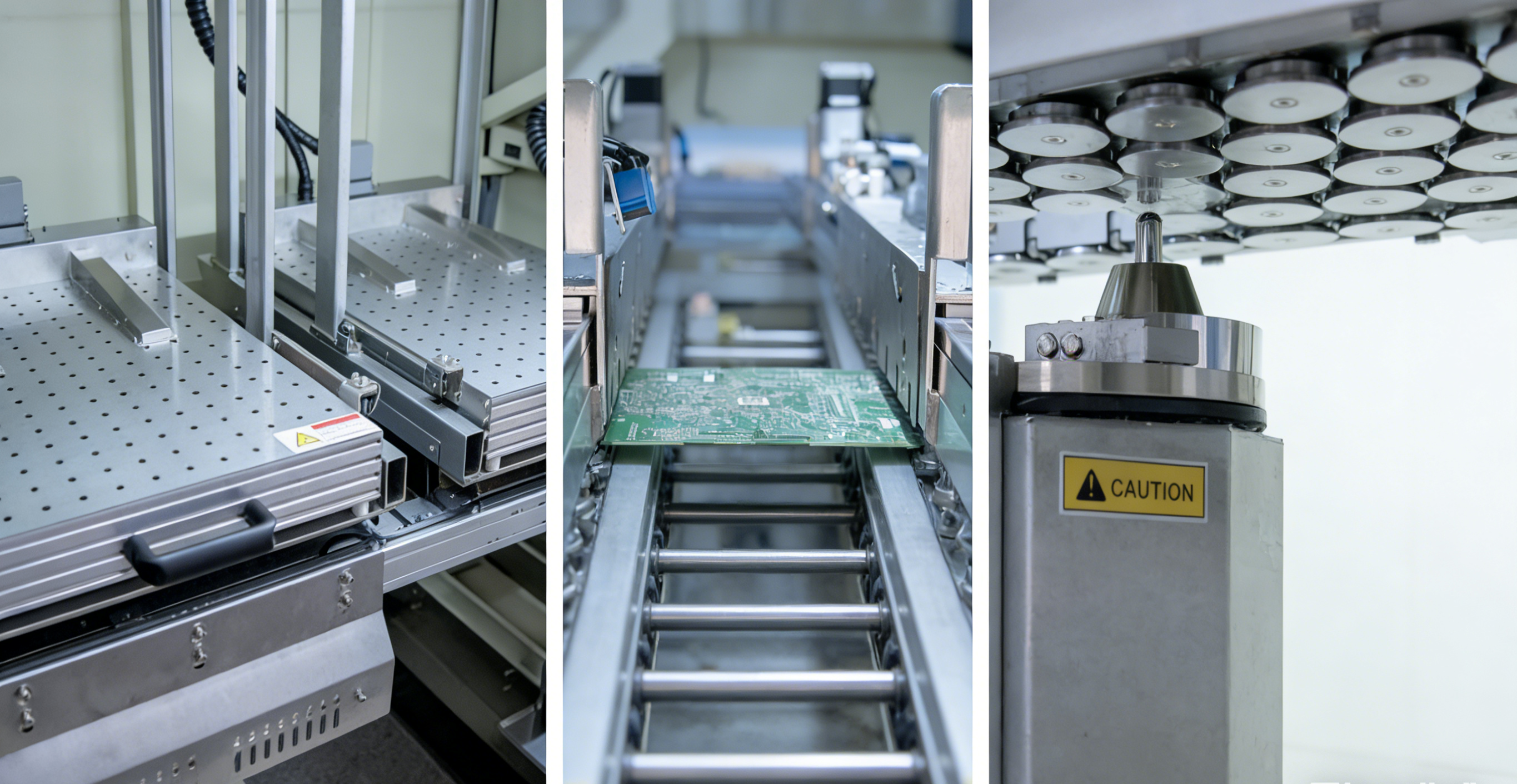
Furthermore, with data visualization as the core, through KPI monitoring, SPC statistical process control, and MES system integration, BRUNIMIND turns the production process from "passive problem response" to "active risk prediction", realizing the predictability and stability of production output. BRUNIMIND's independently developed production line data management system can seamlessly connect with the enterprise's existing MES system, realizing real-time collection and analysis of equipment operation, process parameters, product yield and other data. In all such transformation projects, data visualization is carried through the whole process. In the industry, the ASYS Group GenS series of intelligent equipment realizes real-time monitoring of production data through intelligent energy management and dynamic drive. BRUNIMIND combines the data collection capabilities of such equipment with its own system to create a full-link data system, from real-time collection of equipment operation data of sensor assembly production lines, to dynamic monitoring of daily plan achievement rate and process yield of small and medium-sized electronic enterprises' production lines, and to full-process traceability of process parameters of production lines after chip transformation. Through data early warning, potential problems in welding, insertion, inspection and other processes are found in a timely manner, shifting from "post-rework" to "pre-prevention", so that the first-pass rate of cooperative enterprises' production lines is averagely increased to more than 99%, and the customer return rate is greatly reduced, truly realizing the sustainable growth of production efficiency.
Beyond the optimization of single-point technologies and processes, BRUNIMIND adheres to the concept of integrated and scalable production line planning, rejecting process fragmentation caused by isolated equipment procurement. Through professional on-site audit, precise parameter adjustment, and systematic personnel training, we realize the seamless coordination of the entire production line, making every piece of equipment and every process an organic part of efficiency improvement. Whether it is the upgrading of collaborative robots in sensor production lines, chip transformation to solve the production line shutdown crisis, or the implementation of lean management to improve production line flexibility, BRUNIMIND always takes the overall perspective of the production line to create a modular and scalable structure, enabling the enterprise's production layout to adapt to changes in industrial upgrading and market demand, and realizing the long-term maximization of investment value. At the same time, BRUNIMIND provides systematic personnel training for cooperative enterprises, covering lean production concepts, intelligent equipment operation, data system operation and maintenance, etc., enabling enterprise employees to quickly adapt to the upgraded production line and ensuring the continuous and stable efficiency of the production line.
The competition in electronic manufacturing is ultimately a competition of efficiency and lean production capabilities. BRUNIMIND has always taken "solving actual production pain points and creating sustainable efficiency value" as its original intention, combining cutting-edge industry insights with its own technical capabilities to transform into implementable production strategies. With one benchmark project after another, we provide electronic manufacturing enterprises in automotive electronics, industrial control, sensors and other fields with upgrading solutions adapted to their own development. In this efficiency revolution, BRUNIMIND is willing to be a partner of enterprises, breaking production bottlenecks with lean innovation, activating production potential with overall thinking, defining a new height of electronic manufacturing efficiency together with the industry, and making every DIP/THT production line a core driving force for enterprises to reduce costs, increase efficiency and achieve high-quality development.
• Comprehensive on-site diagnosis: Conduct 3-7 days of on-site production line research, collect data such as process cycle, material flow, and workstation load, draw production line value stream maps, and identify non-value-added processes and process bottlenecks;
• Customized lean solution: Combine the enterprise's product characteristics and order structure to design layouts such as U-shaped cell lines and modular workstations, optimize material distribution paths (such as AGV rhythmic distribution), and eliminate wastes such as process waiting and material handling;
• Phased implementation and verification: First complete the process optimization of core processes, verify the efficiency improvement effect through data, then gradually promote it to the entire production line, and establish process optimization SOP to ensure the implementation effect.
• Precise equipment selection: Select wave soldering, selective wave soldering and other equipment according to the enterprise's product PCB specifications, component density, and welding requirements, adapting to industry trends such as lead-free welding and high-precision welding;
• Refined parameter control: Simulate welding thermal curves through the process digital twin system to determine the optimal welding parameters, and build a real-time thermal curve monitoring system to realize dynamic adjustment of welding temperature, speed and other parameters;
• Continuous process optimization: Combine production data and advanced industry experience to optimize process details such as flux dosage and solder temperature, reducing welding defect rates from the source and improving first-pass yield.
• Standardization of quick-change fixtures: Create standardized quick-change fixtures suitable for multiple specifications of PCBs, realizing fixture replacement within 5 minutes and eliminating fixture debugging waste in traditional changeover;
• Formula-based process parameters: Build a process parameter formula library to store parameters such as insertion, welding, and inspection of different products, enabling one-click call without repeated debugging;
• Standardization of changeover process: Formulate a standardized changeover process, clarify the changeover responsibilities and time nodes of each position, and cooperate with visual management to make the changeover process efficient and orderly.
• Identification of bottleneck processes: Identify bottleneck processes with low efficiency and high labor dependence such as insertion, assembly, and inspection through OEE (Overall Equipment Efficiency) analysis;
• Customized automation solution: According to the enterprise's scale and budget, adapt AI insertion machines, collaborative robots, automatic inspection equipment, etc. for bottleneck processes. Large enterprises realize full automation of core processes, while small and medium-sized enterprises focus on the automation of high-frequency bottleneck processes;
• Optimization of man-machine collaboration: Retain the advantages of manual labor in flexible adjustment, exception handling and other links, and create a man-machine collaboration model of "robots doing repetitive work and humans doing creative work" to improve production line flexibility and efficiency.
• Full-link data collection: Install IoT sensors and data collection terminals on equipment and workstations to realize real-time collection of equipment operation parameters, process parameters, product yield, production progress and other data;
• Intelligent data analysis: Through the independently developed production line data management system, combined with SPC statistical process control, conduct multi-dimensional analysis of the collected data to explore production rules and potential problems;
• Real-time early warning and traceability: Set early warning thresholds for key indicators. When equipment is abnormal, parameters deviate, or yield decreases, the system automatically issues an early warning. At the same time, bind a unique QR code to each PCB to realize full-process production data traceability, meeting the compliance requirements of automotive electronics, medical electronics and other industries.
• Enterprise Pain Points: The automotive intelligent terminal products have many categories and large differences in order batches. The traditional DIP/THT production line has a scattered layout, high labor dependence, and difficulty in increasing production capacity;
• Upgrading Solution: Reconstruct the production line process in accordance with Industry 4.0 standards, seamlessly connect SMT placement, DIP insertion, and automatic assembly and testing processes, and adopt modular layout and automated equipment to realize full-process low-manpower operation;
• Implementation Effect: Only about 10 people are needed to complete the entire process from raw material feeding to finished product delivery. The annual output of automotive intelligent terminals has increased from 1.2 million to 3 million units. The placement accuracy can meet the placement requirements of 01002 specification micro-components, and the product yield is stably above 99.5%.
Case 2: TCL Huaxing Suzhou Base — Intelligent Upgrading of DIP/THT Production Line Empowered by AI
• Enterprise Pain Points: In the DIP/THT production of PCB boards supporting display panels, micron-level defect detection is difficult, manual detection is inefficient and error-prone, and equipment failures are likely to cause unplanned shutdowns;
• Upgrading Solution: Introduce AI digital employees to realize automatic defect identification and repair, build an equipment predictive maintenance system, and conduct real-time analysis of data such as torque, temperature, and vibration of core equipment;
• Implementation Effect: Replaces 75% of traditional manual detection, with a defect identification accuracy of 95%. It can accurately predict more than 95% of potential equipment failures 72 hours in advance, and the OEE of the production line is increased to more than 92%.
• Enterprise Pain Points: The industrial control PCB board includes 120 surface mount components and 30 through-hole connectors. Traditional wave soldering is prone to problems such as cold soldering and bridging, with a welding defect rate of 5%;
• Upgrading Solution: Introduce selective wave soldering equipment, adopt point-to-point precision welding mode, combined with refined thermal curve control and nitrogen protection atmosphere;
• Implementation Effect: The welding defect rate drops sharply to 0.3%, flux dosage is reduced by 40%, solder loss is reduced by 35%, and the annual rework cost is saved by more than 2 million yuan.